.png)

Modern product organizations need a different operating model.
Vector North helps build it: changing how organizations decide what to build, creating evidence through real products, and turning what they learn into lasting capability.
Are we actually building the right things?
Roadmaps are full. Engineering is shipping. AI pilots are appearing across nearly every department. Leadership has never been busier.
Yet one question continues to surface in planning meetings, roadmap reviews, and board discussions: are we actually building the right things?
Many organizations are not struggling because they lack ideas or execution capability. They struggle because there is no consistent way to move from assumptions to evidence, and from evidence to better decisions.
That is where Vector North begins.
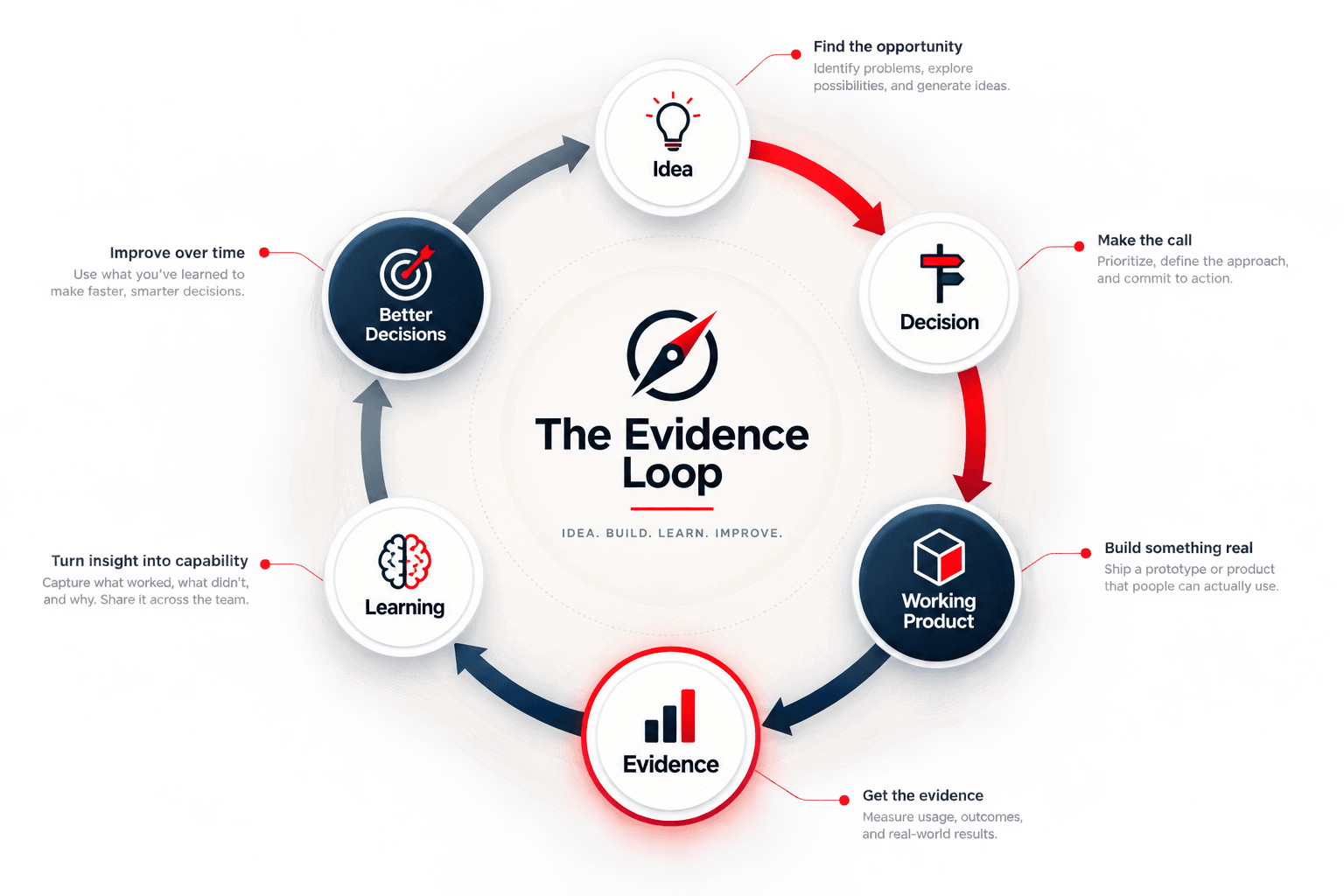
- 1
Idea
Spot a real opportunity
- 2
Decision
Choose the approach
- 3
Working Product
Build something real
- 4
Evidence
Measure what happens
- 5
Learning
Capture what worked, and why
- 6
Better Decisions
Decide faster next time
Three connected capabilities. One continuous cycle.
Transform. Build. Learn. is connected through Adaptive Outcome Delivery™, Vector North's operating philosophy for turning outcomes, evidence, and learning into a continuous cycle.
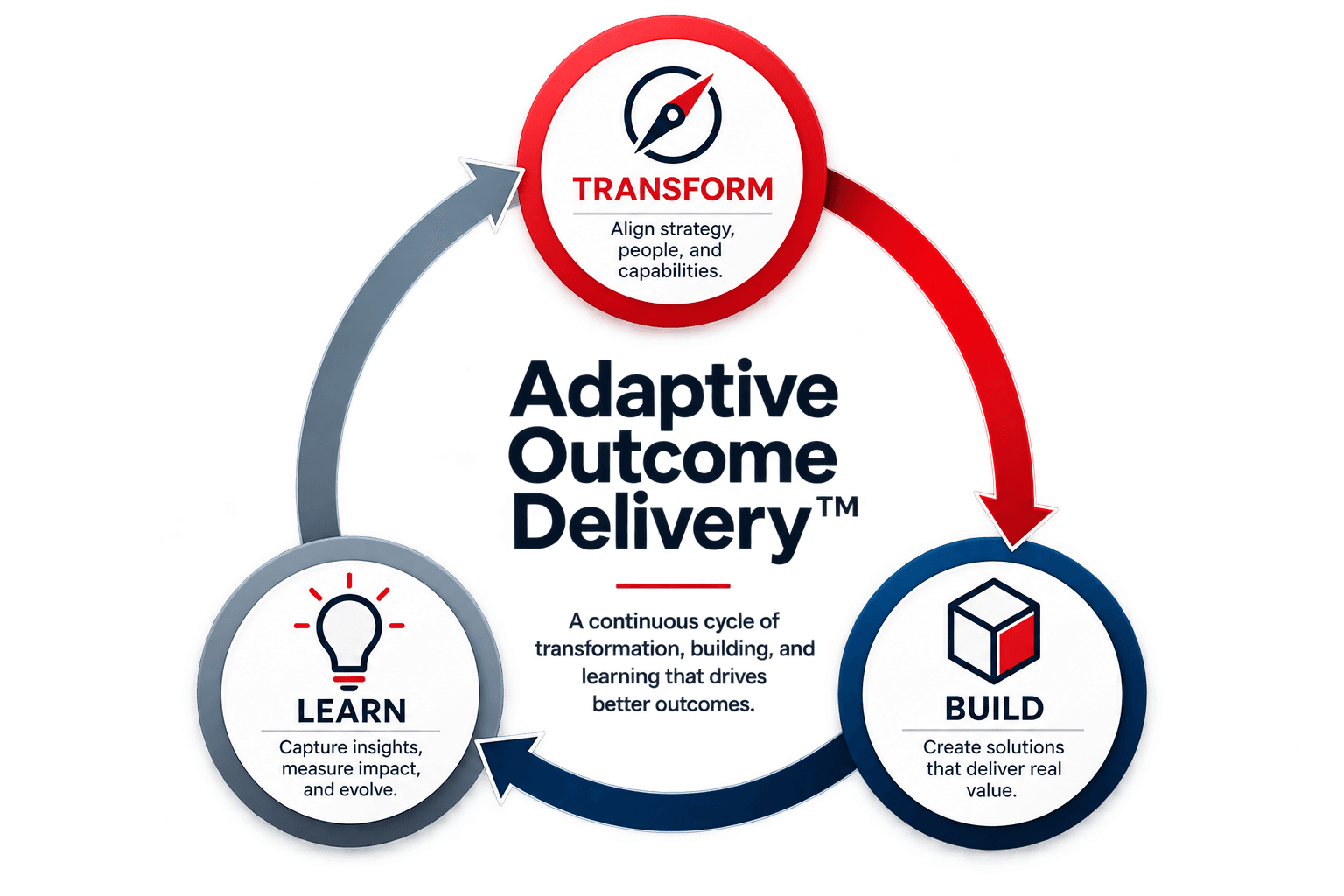
Vector North connects strategic product leadership, hands-on building, and organizational learning into one operating model. The goal is not simply to deliver recommendations or software. It is to help organizations make better decisions about what happens next.
Why Vector NorthOrganizations usually come to Vector North when something important needs to change.
AI opportunities are multiplying faster than leadership can evaluate them.
The roadmap is full, but confidence in the priorities behind it is low.
An important product idea needs real-world validation before the organization makes a larger investment.
Product teams are busy, yet decision making has become slower, harder, and less connected to strategy.
The organization needs experienced product leadership during a period of growth, transition, or change.
Valuable lessons are being learned, but they are not becoming shared organizational capability.
Our work is grounded in a simple belief: better products begin with better decisions.
Read Our PhilosophyReady to make the next product decision with more confidence?
Whether you are rethinking how product work gets done, validating an important opportunity, or navigating a leadership transition, the best place to start is a conversation.